In this video essay, we will explore the "Four Buttcheeks" of the digital apocalypse: Platforms, Advertisers, Identity Providers, and Data Brokers…who treat ...
If your phone was listening to you and transmitting your voice data all the time, you will notice the impact on your battery and data usage. Siri has a mechanism that waits for you to call it that is offline and separate from the actual mechanism that listens and transmits your command. Now once that is activated, it’s fair game, including whatever background chatter it hears.
We have to remember that this will change in the future. New phones have more and more powerful NPUs which are very good at speech recognition. We are not far away from the time when a phone will be able to do good enough STT and send the transcript only.
You’ve never requested your data from google. I did a while ago and found a dozen recordings of my voice from my pocket despite having the voice assistant turned off.
So yes, google has this too. You have to say OK Google before it is supposed to reach out to the cloud. Except they lied, and so did Apple.
https://www.bbc.com/news/articles/cr4rvr495rgo
And with Google Android my phone was lasting 1 day, with degoogled android I would get ê days out of a charge.
So whatever google does is doing a ton of network traffic.
There have also been analyses into the volume of traffic used at rest vs. the amount used during pretty much anything else including conversations with digital assistants. Those found that there wasn’t enough data being transferred for it to be voice recordings.*
*I don’t remember where I read this. I’m just one guy on the intternet. Quesion the veracity of my comment.
If your phone was listening to you and transmitting your voice data all the time, you will notice the impact on your battery and data usage. Siri.
I agree in principle, we would probably notice, because most engineer are occasionally lazy or idiotic.
But, I can think of ways to make this happen without any battery impact. Capture in a format that doesn’t need re-encoded in the moment, and wait to convert and transmit only when the phone is plugged in. Don’t even clean up the data on the phone, just trickle the highlights up to the cloud.
Then in some future version of Android, wedge in a local AI layer, and call into that to pick highlights to share with advertising partners.


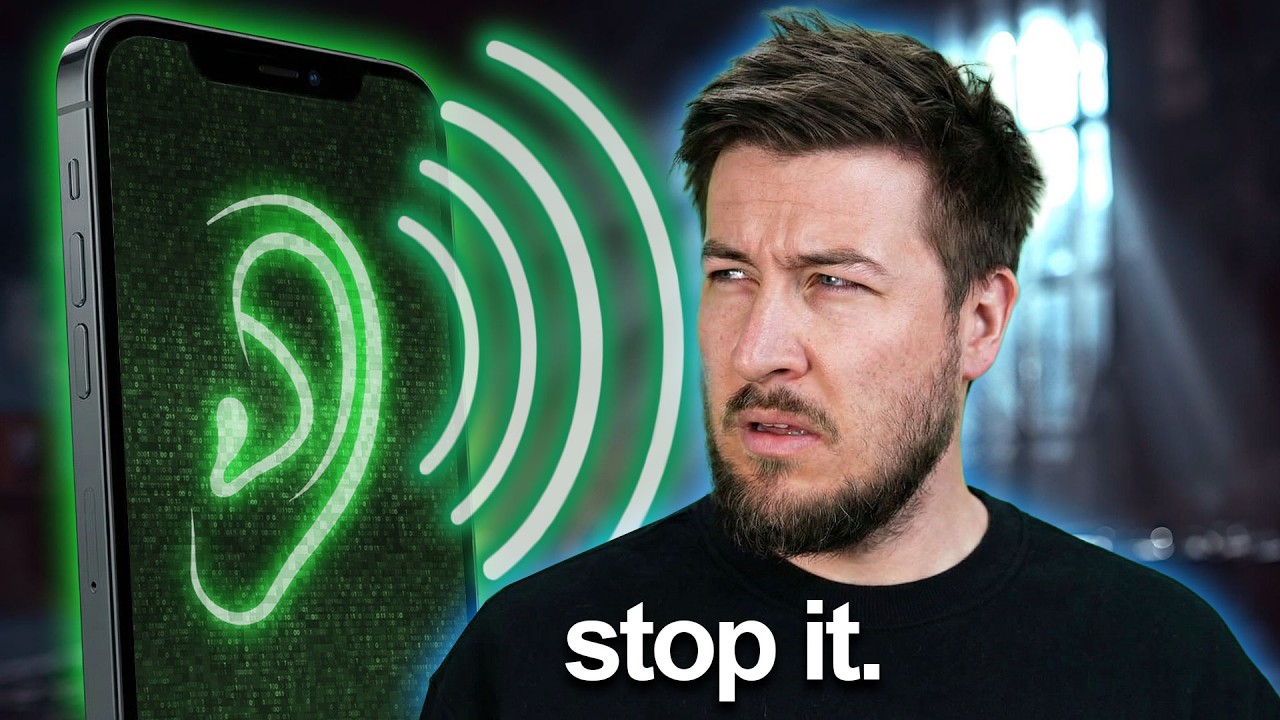
If your phone was listening to you and transmitting your voice data all the time, you will notice the impact on your battery and data usage. Siri has a mechanism that waits for you to call it that is offline and separate from the actual mechanism that listens and transmits your command. Now once that is activated, it’s fair game, including whatever background chatter it hears.
We have to remember that this will change in the future. New phones have more and more powerful NPUs which are very good at speech recognition. We are not far away from the time when a phone will be able to do good enough STT and send the transcript only.
You’ve never requested your data from google. I did a while ago and found a dozen recordings of my voice from my pocket despite having the voice assistant turned off.
So yes, google has this too. You have to say OK Google before it is supposed to reach out to the cloud. Except they lied, and so did Apple. https://www.bbc.com/news/articles/cr4rvr495rgo
And with Google Android my phone was lasting 1 day, with degoogled android I would get ê days out of a charge. So whatever google does is doing a ton of network traffic.
There have also been analyses into the volume of traffic used at rest vs. the amount used during pretty much anything else including conversations with digital assistants. Those found that there wasn’t enough data being transferred for it to be voice recordings.*
*I don’t remember where I read this. I’m just one guy on the intternet. Quesion the veracity of my comment.
I agree in principle, we would probably notice, because most engineer are occasionally lazy or idiotic.
But, I can think of ways to make this happen without any battery impact. Capture in a format that doesn’t need re-encoded in the moment, and wait to convert and transmit only when the phone is plugged in. Don’t even clean up the data on the phone, just trickle the highlights up to the cloud.
Then in some future version of Android, wedge in a local AI layer, and call into that to pick highlights to share with advertising partners.