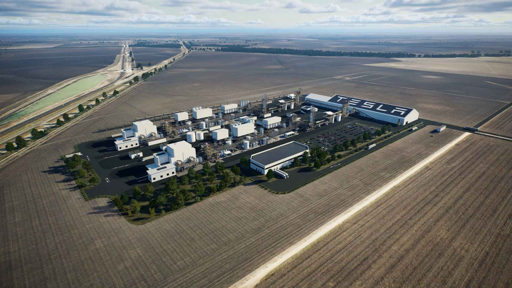
The pipe belonged to Tesla. The dark liquid was wastewater from the company's nearly $1 billion lithium refinery, which began operations in December 2024 and
Isn’t that the important part of the story? Effing Texas regulators didn’t detect Strontium (or other pollutants the factory didn’t mention) so didn’t test for it?
We’re so used to the idea that companies will do the least they are mandated to, but isn’t that why we have regulators? If I get a new water heater I’m required to have an inspector sign off and his job is to flag anything that is off. Why can’t a multibillion dollar industrial facility be held to the same standard?
Effing Texas regulators didn’t detect Strontium (or other pollutants the factory didn’t mention) so didn’t test for it?
I mean, they did. That’s how we know about it. But what can they actually do about it? Prince Abbott will just cover this up and fire anyone who won’t shut up about it.
If a discharge pipe is traced back to a company - and it is discharging unsafe levels or typically unexpected chemicals - then it should be on that company to get their waste water into a manageable condition.
Just because a municipal/council/whatever has above average water processing, doesn’t mean companies get a free pass to abuse it


It can. But you’d need a facility built to do it.
If you don’t anticipate Strontium in your wastewater, you’re not going to build a system to leech it out or neutralize it.
Isn’t that the important part of the story? Effing Texas regulators didn’t detect Strontium (or other pollutants the factory didn’t mention) so didn’t test for it?
We’re so used to the idea that companies will do the least they are mandated to, but isn’t that why we have regulators? If I get a new water heater I’m required to have an inspector sign off and his job is to flag anything that is off. Why can’t a multibillion dollar industrial facility be held to the same standard?
I mean, they did. That’s how we know about it. But what can they actually do about it? Prince Abbott will just cover this up and fire anyone who won’t shut up about it.
Given the state of Texas’ infrastructure, probably fair to assume this doesn’t exist.
Houston has one of the better waste water treatment plants in the country.
Robstown, though? Idk. Doubt it
If a discharge pipe is traced back to a company - and it is discharging unsafe levels or typically unexpected chemicals - then it should be on that company to get their waste water into a manageable condition.
Just because a municipal/council/whatever has above average water processing, doesn’t mean companies get a free pass to abuse it