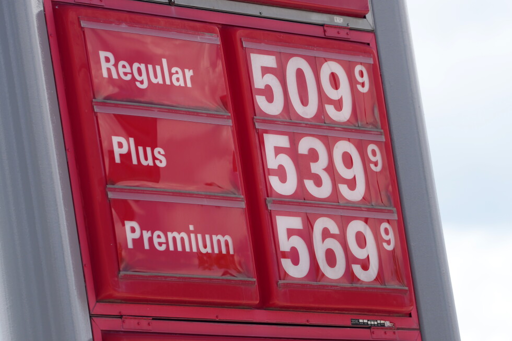
WASHINGTON (AP) — U.S. consumer confidence declined slightly this month as gas prices stayed high and inflation remained elevated, a sharp contrast to soaring stock prices hover near record levels.

The Conference Board’s consumer confidence index slipped 0.7 points to 93.1 in May, the first decline after three months of gains. The measure hasn’t fallen as much this year as other gauges of consumer attitudes, but it has been stuck at a low level since the pandemic. Before COVID-19, it regularly reached 130.

A separate gauge of consumer sentiment released last week by the University of Michigan fell to a record low this month. Soaring gas and food costs have worsened inflation that is outpacing the average growth in paychecks, reducing most Americans’ purchasing power. Americans have soured on President Trump’s economic policies, polls show, potentially creating problems for Republicans heading into the midterm elections.

  • Snot Flickerman@lemmy.blahaj.zone
    link
    fedilink
    English
    arrow-up
    22
    ·
    edit-2
    1 day ago

    Currently the rest of the stock market is essentially held up by 7 companies.

    https://oriongemini.substack.com/p/the-number-is-going-up

    Tier 1 — Magnificent Seven / Mega-Cap: Up 75–100%+ over five years. Cash-rich near-monopolies trading on AI futures. Effectively function as quasi-sovereign entities. Collectively hold over $420 billion in cash.
    Tier 2 — Rest of S&P 500: Up 50–60%. Piggybacking on the giants through index weighting. Solid balance sheets but increasingly dependent on AI-adjacent demand.
    Tier 3 — Russell 2000: Up roughly 17%. The “one percent of the losers.” Struggling but kept alive by access to public capital markets. 40–44% unprofitable. Facing a $709 billion refinancing wall in 2026–2027.
    Tier 4 — Private Middle Market: Flat to declining. Consolidating from roughly 200,000 to 125,000 firms over two decades (RSM). Margin-squeezed by tariffs and input costs. RSM MMBI showing fragility.
    Tier 5 — Main Street / Small Private Business: Fighting to exist. No access to Wall Street capital. Absorbing inflation that large firms pass through to customers. NFIB Optimism Index showing persistent fragility.