

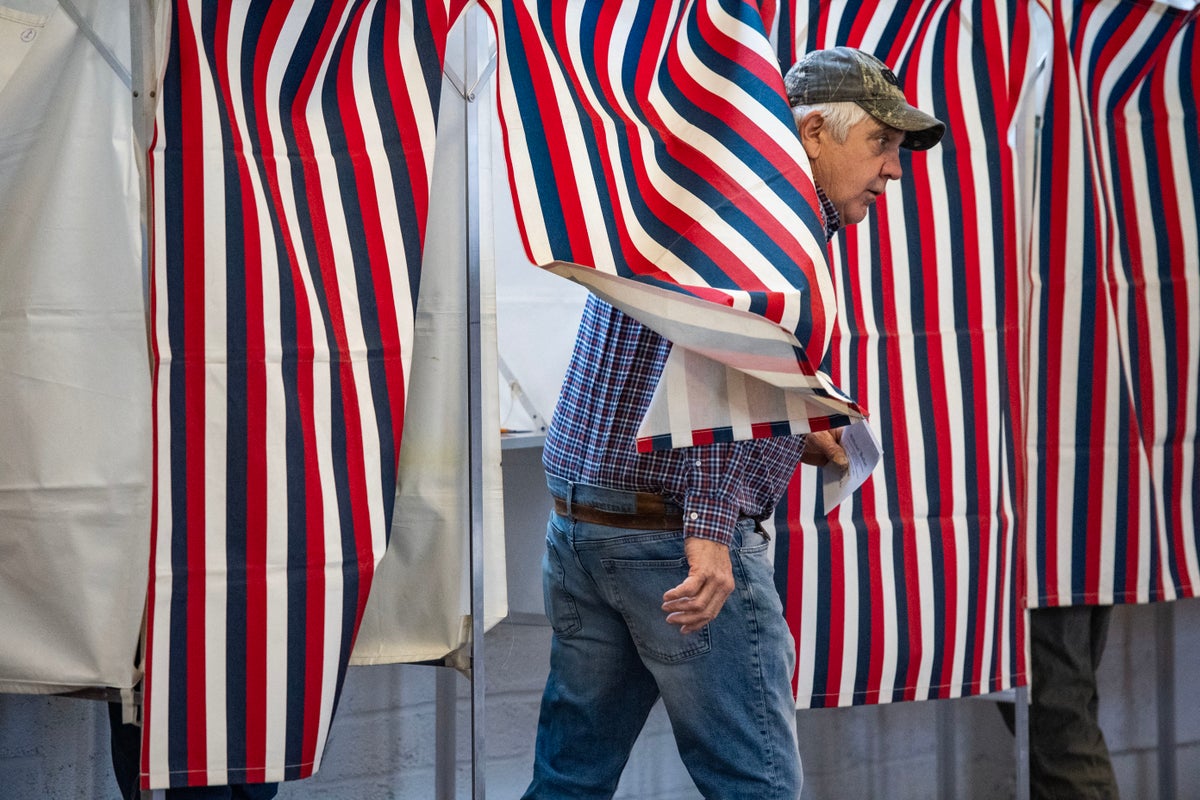
Democrats are currently leading Republicans in the RealClearPolling generic congressional average
A blue wave may not be as certain as some polls have predicted, experts warn ahead of Election Day, noting forecasts may be skewed because Trump supporters are notoriously difficult to reach, according to a report.
While current polls paint a positive picture for Democrats ahead of the midterms this November 3 — some pollsters are questioning whether that number may be inflated due to supporters of President Donald Trump being difficult to reach by pollsters, Axios reported.
Polls previously underestimated Trump’s support during the presidential races in 2016, 2020 and 2024. Even though midterm polling is typically more accurate, some still underestimated Republican support in 2022, Scott Keeter, senior survey adviser at Pew Research Center, told Axios.
Which doesn’t mean those policies aren’t popular. They’ve simply been propagandized to be “fairy tales”. The opposition can’t argue over the policy itself because the policy is popular so they have to argue around it. That’s where you get these arguments that something is too expensive to implement or it’s going to get exploited by “the wrong people” and such. But it doesn’t make those policies unpopular. El-sayed is a great example because he runs on progressive policies and is very popular in his state. If the policies by nature were unpopular he wouldn’t be a popular candidate. Nobody gave a shit that Mike Rogers kept saying El-Sayeds policies are too expensive because El-Sayed cuts through that bullshit to keep people focused on what the policy actually is.
And if we go back to those popular “liberal” policies at least half of them are also progressive policies and some of them I wouldn’t even consider liberal, such as “Public Infrastructure and Education”. Modern American liberalism is against state socialism and state controlled public use of anything is technically state socialism. Liberals have simply adopted parts of progressive policies because they’re so popular not adopting them would be stupid.
Popularity isn’t about anything other than the proportion of people in favor. If the majority of people believe the empty arguments around the policy, it will be unpopular.
The trickiest part of politics is dealing with the fact that people are mostly uninformed and uninterested, and grappling with the foolishness of the average citizen.
Which is why the popularity of a policy should be looked through the lens of do people actually support the idea behind the policy instead of what the policy is called. For example Medicare is viewed favorably among the republicans but when you turn around and start asking about government health coverage suddenly the support flips in the other way and republicans hate the idea. Except that’s pretty much what medicare is.
You can’t view popularity of a policy on a superficial level because on a superficial level the popularity swings whatever way depending on the very specific phrasing of the question. You have to get to the core of policy and then view the popularity of the core idea to understand the popularity of a policy. Because if the policy at its core is popular you can find support for it by cutting through the bullshit, but if the policy is unpopular no amount of cutting through the bullshit will get you support. You have to actually spin bullshit to make an unpopular policy popular and you can only do that when there’s nobody on the other side calling it out. Going back to the El-Sayed and Rogers example, the reason their debate was so one-sided is because El-Sayed was on the side of popular policies and could easily present them as they are. And Rogers couldn’t do anything because every time he tried to bullshit something he got called out.