

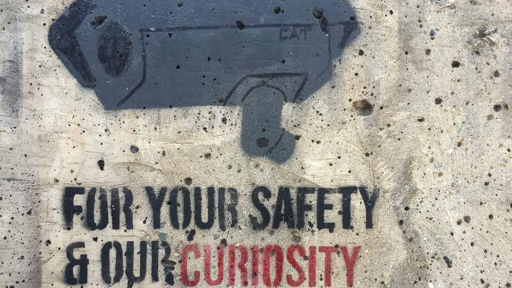
When it can be assumed that you are being surveilled while expressing negative opinion about the federal government, it’s probably best to go ahead and make the assumption, particularly during the punitive heights of the second Donald Trump administration. New reporting from the Associated Press this weekend detailed some aspects of not only United States Immigration and Customs Enforcement’s (ICE) latest anti-immigrant and deportation campaign in New Orleans, but also some interesting insights into how both the federal and state law enforcement agencies involved have been engaged in online surveillance campaigns to track public sentiment toward that crackdown. The story paints a chilling profile of a United States in which dissent against the regime’s campaign of immigrant-targeted cruelty is being carefully compiled, filed away for the potential of future use against American citizens. Not that any of this should be a surprise for any of us.
We have, after all, been warned over and over that organizations like ICE have been wanting to vastly expand their online operations, using the same vastly expanded budget that recently saw them purchase a new $7.3 million fleet of (Canadian made) armored vehicles. The online expansion of ICE, meanwhile, is not just in the name of locating more groups of undocumented immigrants to target, but also to compile sprawling digital enemies lists, creating databases of those who have expressed anti-ICE sentiment. Earlier this year, The Intercept wrote about surveillance contractors sought by ICE, who would be expected to perform algorithm- and AI-aided deep dives into social media users’ post histories, searching for, among other things, “proclivity for violence,” which could include “empathy with a group which has violent tendencies,” among other things. Hope you haven’t expressed “empathy” at any point for any group with “violent tendencies,” right? How does it feel to know that you’d be at the mercy of a freelance surveillance contractor’s mastery of “social and behavioral sciences” and “psychological profiles,” according to ICE’s statement of objectives?
How much of these draconian operations have already been implemented isn’t entirely clear thanks to the shroud of secrecy surrounding the DHS and ICE, but fresh reporting in October noted that ICE was in the process of seeking an additional 30 full-time surveillance contractors to staff two of its “targeting centers”–and yes, that is apparently the official, deeply dystopian term for these facilities. These facilities, in Williston, VT and Santa Ana, CA, would run 24/7 shifts as surveillance analysts “receive tips and incoming cases, research individuals online, and package the results into dossiers that could be used by field offices to plan arrests.” The obvious question: How long until the same resources are being used to target those critical of ICE, or those organizing to impede ICE crackdown efforts, under the guise of “interference with law enforcement operations”? It should also be noted that even if ICE isn’t directly targeting those individuals yet, the unspoken threat of this kind of online surveillance could be intended to have a chilling effect on anti-ICE criticism.
Any universe has at least one sentient being.
Rights aren’t circumstantial. How people are treated IS circumstantial. Rights as a concept is not about outcomes. Rights is what is rightly DUE. Rights get violated all the time. That means we tresspass on the minimums that are due. Someone is due privacy, but we spy/surveil them instead. Rights are worth defending. Without defending, rights will get violated. Whether we defend rights or not, they exist as defined. Anyone can just start defending rights at any time, and it doesn’t mean you’re building rights at that time.
It’s like counting. Whether you count or not, number 3 exists as a distinct meaning. Rights are like that. Rights exist and have meaning. You can even live a million lifetimes and not know a damn thing about rights in all that time, and this would not negate rights any more than if even every sentient being stopped counting and forgot counting negated numerical concepts. Counting concepts exist, are real, are ever available, and their use can be resumed at any time.
What in the hell is this idiocy?