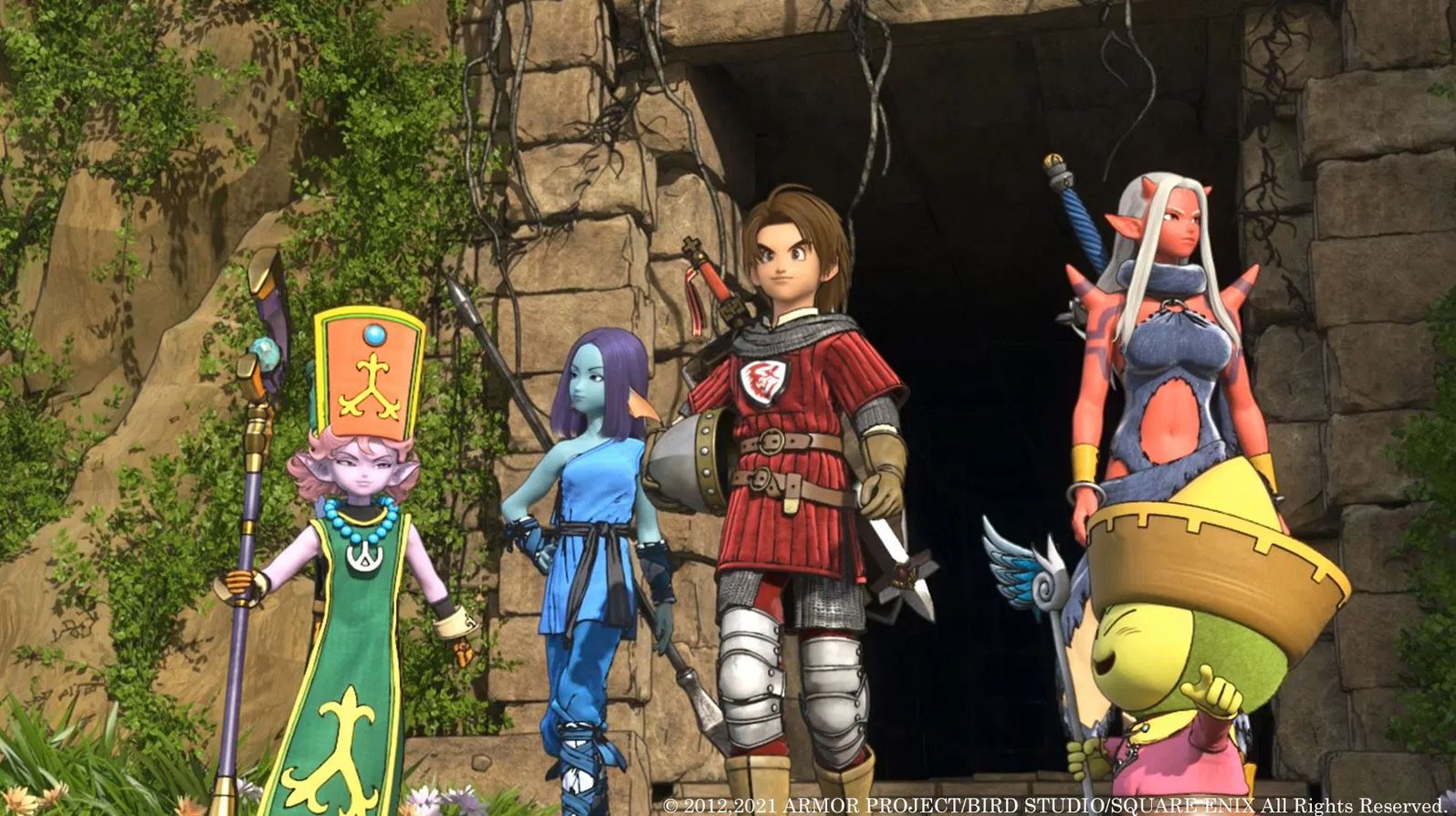
Tell me more about this…puff puff
At least we’re not calling them Dragon Warrior anymore and lumping SaGa and Mana into Final Fantasy.
White people when you try and explain that English isn’t a universal language which everything translates easily into.🤯🤯😱😱🤬🤬
The article doesn’t have anything to do with race, but thank you for the racism.
I’m Irish you crispy cracker.
Typical Japanese superiority complex.
Having done it myself, I find several big issues with Japanese -> English translation:
- Honorifics. Referring to someone with -kun or -chan or -sama or -bucho all have very different connotations. Sure, you could just include the honorifics as is but I don’t think that many people unfamiliar with the Japanese language know what -kohai means.
- Culture: Even if the translation is perfect, characters may act in bizarre ways for Westerners. “He knows that guy is evil, so why doesn’t he shoot him?” “Shooting people is very serious shit in Japan.” “Well no one told me!”
- Puns: The big one. To give an English -> Japanese example, how do you translate the joke, “I no that!”? Joke being, the “no” implies that the speaker doesn’t actually know what “that” is, with the “no” taking the place of “know” since they sound the same. “No” in Japan is “iie”, and “know” is “shiru”. They don’t sound alike at all, so how do you do it? Japanese is filled with puns like this, and most of them are completely lost on Westerners.
That said, I do support translators for giving Westerners a variant of the Japanese version. But there’s no mistake that a lot is lost.
sorry but, isn’t ‘shooting people’ serious shit everywhere?
Unlike places like the US, people in Japan aren’t really supposed to have guns. So if some dude kicks your door in, threatens you with a knife, and then you shoot him with a gun you’re not supposed to have, you could still go to jail for illegal possession of a gun.
Even the Yakuza are hesitant to use guns.
Sounds like a skill issue. Bad translations are bad because they don’t find good ways to translate these kinds of things. As you say, translation isn’t just about the words, it’s about cultural context. But, bad translations aren’t inevitable just because good translations are difficult.
Have you done Japanese -> English translations yourself? For example, if a character is named “79”, how would you subtly show that the character’s name is literally “Earth”, in English? (地球 = ちきゅう = ち*きゅう = 7*9)
Sounds like a skill issue. Good translation is hard and is rarely a literal one to one mapping of syntax and diction. It’s an interpretive art.
I can imagine a lot of heartache and contention around where one lands with this. But I gotta be honest, my favorite Japanese properties are the ones where the translators took a lot of liberties and flexed some writing chops to make the most flavorful expression of something that fit what the creator was going for.
There’s a lot of Japanese/Chinese mystery games where suspects blend together because I can’t remember which person is Yuang Ho or Ryuiki Takachi. But I’ll always remember that in Ace Attorney, I play as Phoenix Wright, and am cross examining suspicious man Frank Sahwit. The cultural relevance of the changed names improves context learning. The series has been mocked for its adjustments, but I like them.
Other weird moments of creativity came from the dubbing team that did Ghost Stories as an “abridged series”, and the Trails in the Sky localizers that found a string table that duplicated “The chest is empty” for each treasure chest in the game, and decided to make each one a ridiculous message.
On the other end, there’s moments like the infamous quote in Rhapsody. The parentheses are part of it.
This is WhiteSnow, a town filled with snow. Enjoy the world of snow. (Note: This is what happens when you do a direct translation.)
This reminds me of anime subtitles from the 1980s. Most of those I’ve seen are simplistic, boring, and sometimes misleading.
Bad translations still exist today, of course, but I don’t run into them as often. I’m guessing that the growth of anime popularity in the west, along with increased translation budgets, have something to do with that. Better translators are probably doing some of this work now.
Losing a game’s flavour in translation might be a challenge to overcome, but I don’t think it’s inevitable. Suggestion: Don’t make translations an afterthought when producing a game. Instead, recognize that the words used to tell your story and illustrate your world effectively are your story and world, and seek out translators who are especially talented at conveying nuance and feeling. Accept that they are probably better than you are at communicating in their language. Give them room to be creative. Pay them well. You will probably get better results.
This is the main reason I prefer dubs to subs. Crouching Tiger, Hidden Dragon especislly loses flavor in the subtitles that do get translated in the dubs. Every line in the sub is basic and just barely enough to understand the plot. But it lacks the poetry of language that make it good dialogue.